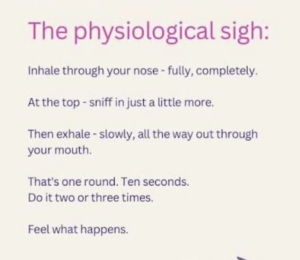
 This technique is a variation of the “physiological sigh” (or extended multi-inhale sigh), a calming breath pattern popularized by neuroscientist Andrew Huberman and rooted in respiratory physiology.
 It uses three inhales (instead of the classic two) before a full exhale. It’s excellent for quickly reducing stress, lowering heart rate, and restoring calm.
How to Do It (Step-by-Step)
- Sit or stand comfortably with good posture (or lie down). Relax your shoulders and jaw.
- First inhale: Take a slow, deep breath in through your nose. Fill your lungs as much as feels natural, expand your belly, then your chest.
- Second inhale (top-up): Without exhaling at all, take a quick second sip of air through the nose. This adds a little more volume.
- Third inhale (top-up): Without exhaling, take one more small sip of air. You’ll feel your lungs quite full.
- Exhale: Let all the air out slowly and fully through your nose (or mouth if it feels more comfortable). Make the exhale longer than the inhales if possible. Aim for a gentle, controlled release.
- Repeat: Do 1–3 cycles whenever you feel anxious, before sleep, or to reset during the day. Start with normal breathing for 10–20 seconds between cycles.
Tip:
Keep everything nasal if you can. Nose breathing activates the parasympathetic nervous system more effectively. The additional “sips” are small; you’re not forcing huge gulps.
Why It Works (Physiological Benefits)
- Rapid CO₂ reset: The double/triple inhale fully inflates the alveoli (tiny air sacs) in your lungs, allowing better gas exchange.
This quickly reduces excess carbon dioxide and balances blood pH, which calms the nervous system. - Activates the parasympathetic “rest & digest” system: The extended exhale stimulates the vagus nerve, lowering heart rate and blood pressure within seconds.
- Reduces anxiety and stress: Studies on similar sigh breathing show it’s one of the fastest ways to down-regulate the fight-or-flight response. It’s more effective than simple deep breathing for many people because it actively “resets” lung volume.
- : Regular use helps shift you out of shallow chest breathing (common during stress) back into slower, diaphragmatic breathing.
- Better sleep: Doing a few cycles before bed is a natural, drug-free way to quiet racing thoughts.
Extra Benefits People Report
- Quick mood lift (often within 30–60 seconds)
- Relief from acute anxiety or panic sensations
- Reduced physical tension (shoulders, jaw, chest)
- Improved oxygen delivery without hyperventilating
This technique is safe for most healthy adults. If you have any respiratory conditions (e.g., asthma, COPD), check with a doctor first. Start gently. Overdoing the inhales can feel straining at first.
Great insights on managing anxiety. Learning to sit with the feeling rather than fighting it makes such a difference.